From idea to innovation — isepos’s success story in automation technology
50 years of experience
How Ingenieurbüro Helmut Singer became isepos GmbH
1975
The success story starts small: in 1975, at the age of 25, Helmut Singer founded Ingenieurbüro Helmut Singer in Köllestraße, Tübingen. He worked as a freelance developer on operating systems at DDC (David Datentechnik).
1979
Hartmut Eichhorn joined as a partner, and the business was renamed Ingenieurbüro Singer & Eichhorn (i.s.e.). Together, the two technicians developed hardware and software for mechanical engineering customers and seismologists. That year, the business moved to Mr Singer’s home in Untere Straße, Tübingen.1980
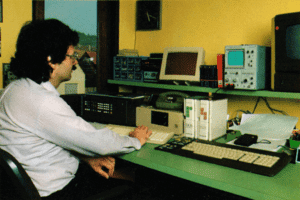 The young company i.s.e. won Lennartz Elektronik as a customer through its technical expertise and developed an interface for a computer tape drive.
1985
A serious setback for i.s.e.: Hartmut Eichhorn left to take a management position at Lennartz Elektronik. Helmut Singer continued the business on his own under the name Ingenieurbüro Helmut Singer.1988
David Datentechnik went bankrupt. Losing its largest customer put the engineering business in a difficult position. An advertisement in the Stuttgarter Zeitung, however, attracted a new customer: Borries Markiersysteme. The relationship gradually took shape through initial freelance work for Borries.1989
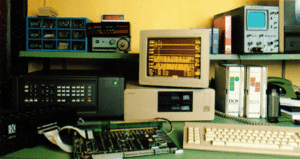 A shortage of orders forced Mr Singer to take a drastic step. He changed his professional focus and staked everything on developing a stepper motor controller board. It was a major gamble for the resourceful family man, as nobody at the time believed such boards would succeed.
1990
Helmut Singer’s efforts paid off. Borries Markiersysteme expressed interest and commissioned a complete stepper motor controller based on the board. This marked the beginning of commercial success that continues to this day.1991
The controller became so successful so quickly that Mr Singer could no longer manage development and production alone. Mr Eichhorn’s return eased the situation. He left Lennartz Elektronik and took responsibility for production and purchasing. The company once again operated as Ingenieurbüro Singer & Eichhorn (i.s.e.), based in Untere Straße, Tübingen.1993
At SPS IPC Drives, now one of the largest international trade fairs for automation technology, i.s.e. presented its innovative products and services. A new customer gained at the fair commissioned a controller for automatically winding electromagnetic coils.1994
Ingenieurbüro Singer & Eichhorn (i.s.e.) successfully launched a control system for selective soldering.1996
The first publicly funded collaborative projects were carried out. These significantly reduced development costs for i.s.e.’s customers.1997
Another milestone: the control system for the Audi A4’s large-scale marking installation was delivered. It automatically identifies vehicles beneath it and lowers the marking head to the precise predefined position to stamp the car’s sequential chassis number on the inside of the body.1998
Production capacity at the Untere Straße premises had reached its limit. Mr Eichhorn therefore moved production and purchasing to Hailfingen, where he had larger office premises beside his home. Development and accounting remained in Tübingen. It was also time to expand the production team: isepos GmbH welcomed its first employee, Martin Schuster. That year also saw the development of a controller for automatically cutting sheet-metal strip to length.
2001
i.s.e. gained another mechanical engineering customer, Sortimat, and manufactured controllers for vibratory sorting systems on its behalf. The workforce grew to five. Given the size of the business and sustained customer demand, Ingenieurbüro Singer & Eichhorn (i.s.e.) became a limited liability company (GmbH). It began trading as isepos GmbH, combining the former abbreviation “i.s.e.” with “pos” for positioning systems.
2003
A new customer, PALM Laser Systems, worked in laboratory medicine and presented isepos GmbH with interesting challenges. Compared with conventional mechanical engineering, this sector required extremely high positioning accuracy in the micrometre range.
2006
Zeiss acquired PALM Laser Systems, making isepos GmbH a direct supplier to Carl Zeiss AG, one of the leading companies in precision engineering and optics.
2007
As part of a collaborative project, isepos GmbH developed a selective solder-wire feed system for EUTECT. This precision control system remains a unique selling point for EUTECT. To enable Carl Zeiss to export the PALM laser systems to the USA, all products required TÜV certification for the NRTL mark. This special test mark is equivalent to UL certification.2008
A ZIM collaborative project produced a new control system for a combined heat and power plant (CHP) fuelled by rapeseed oil. The grid connection system (ENS) was approved by the BG and exceeds the standards still in force today. Unfortunately, the expiry of statutory funding made the installation uneconomical. The in-depth knowledge gained in the project nevertheless laid the foundations for the success of isepos GmbH’s current controllers.2011
Martin Singer, the founder’s son, joins the company and plays a key role as a developer in expanding its product range. Initial discussions about buying the business follow shortly afterwards. Continued success allows the workforce to grow to 11.2012
isepos GmbH’s controllers are equipped with touchscreen interfaces developed specifically for them.2013
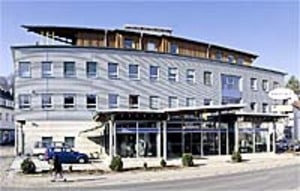 The acquisition discussions reach a satisfactory outcome for everyone: Martin Singer acquires Hartmut Eichhorn’s shares and succeeds him in management. isepos GmbH is once again wholly family-owned. Development and production are brought together to improve communication, moving into shared premises in Kirchentellinsfurt.
2014
 isepos GmbH joins the 3D-CP collaborative network. Under the leadership of the Fraunhofer Institute, the partners explore new approaches to 3D printing. Another collaborative project brings an innovative measurement data acquisition system to market readiness.
2015
For the first time, isepos GmbH presents its extensive range of products and control solutions at “all about automation” in Friedrichshafen, a regional industrial automation trade fair.2017
isepos controllers are also in demand internationally. During a bw-i delegation visit to Japan’s “Hitachi” region, isepos GmbH’s exhibition stand in Tsukuba attracts enthusiasm from Japanese customers. bw-i is Baden-Württemberg’s competence centre for the internationalisation of business and science.2018
isepos GmbH continues its successful development. The company grows steadily and looks for larger premises. Its headquarters move to Wannweil that same year.2019
The founder, Helmut Singer, retires from day-to-day operations, while continuing to advise the company. Martin Singer takes the helm as sole managing director.
Despite its considerable success, isepos GmbH will remain a family-run business. This is the way to guarantee excellent customer support and consistently high product quality.
3D printing will also shape this future. To enable industrial series production using FFF 3D printing, isepos GmbH begins developing a control system tailored precisely to shop-floor use. Among other requirements, the quality of printed workpieces must be significantly improved while printing speeds rise substantially. MTU Maintenance Hannover becomes a capable partner at a very early stage.
2020
In close collaboration with MTU Maintenance Hannover, the company defines the requirements for an innovative 3D printer. Working with further external service providers produces the first isePRINT 3D printer, with hardware that meets both the partner’s requirements and those of the new control technology.2021
Managing Director Martin Singer receives the Reutlingen district’s honorary award for inclusion. isepos GmbH is proud that people with and without disabilities have worked successfully together in positions of responsibility for many years.2022
Working closely with the renowned 3D printing expert Dr.-Ing. Joachim Kleylein-Feuerstein, isepos GmbH develops the groundbreaking isePRINT S 3D printer in-house. Combining expertise and innovation enables the company to offer a cost-effective printer that delivers exceptional precision and performance.
At the end of November, Managing Director Martin Singer travels to Israel with the Wirtschaftsrat Deutschland. He participates in a cultural and business exchange focused on the world-leading high-tech scene in “Silicon Wadi” around Tel Aviv.
2023
Michaela Singer joins the isepos family as a managing director, bringing her expertise and experience to the company. Her commitment and involvement in executive management will further strengthen the company’s existing capabilities and provide fresh impetus for the future.
2024
Verisite: consulting and audits
Under the Verisite brand, isepos GmbH expands its services to include management system and information security consulting and audits. Experience from its own development and manufacturing provides the foundation for supporting other companies.
2025
50 years of company history
Fifty years after the foundation of Ingenieurbüro Helmut Singer, isepos looks back on five decades of development and manufacturing. The engineering practice has grown into a family business in its second generation, with its own control solutions and industrial 3D printing.