
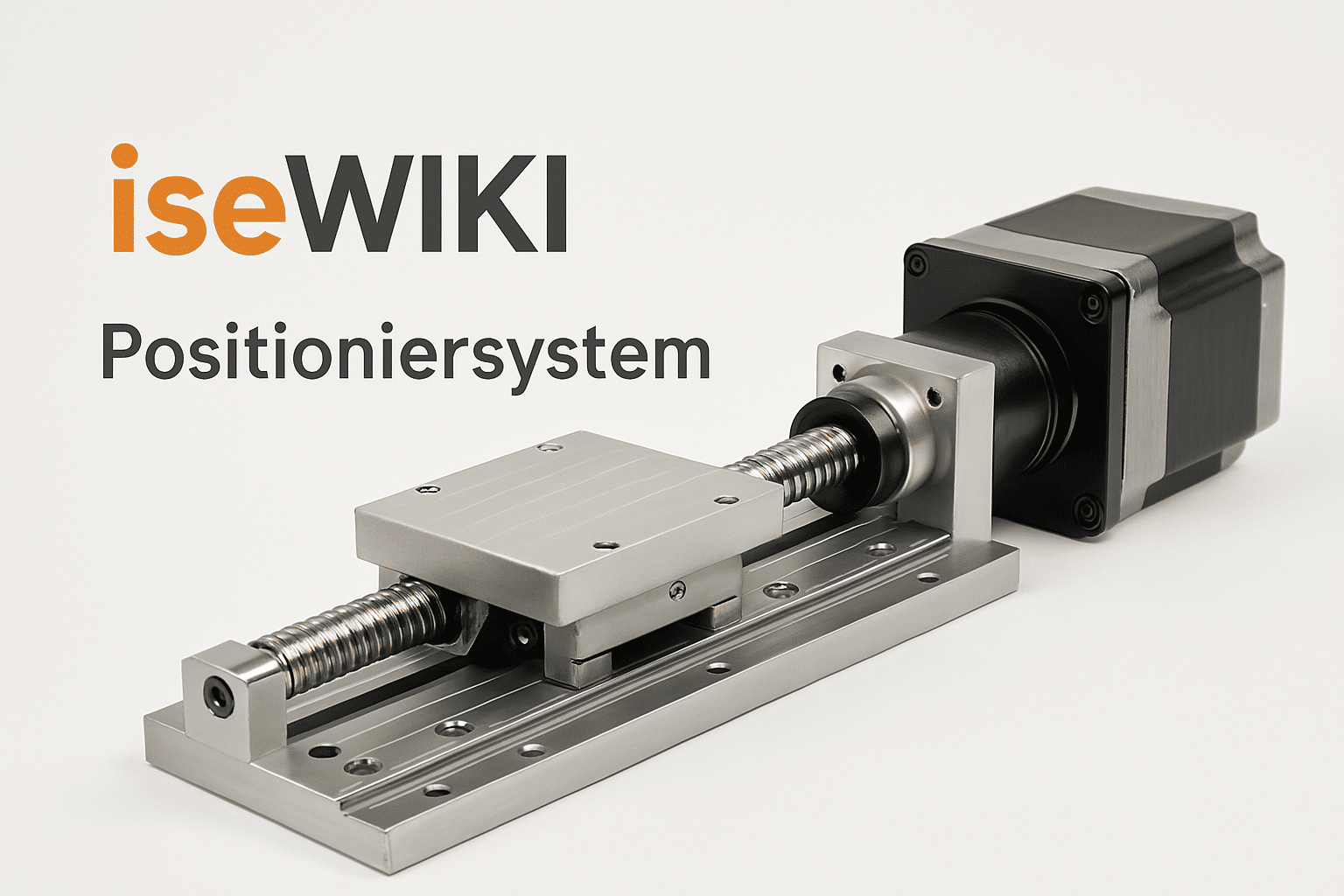
Briefly explained
A positioning system is a technical assembly that moves mechanical components to defined positions repeatably. The movement may be linear, rotary or a complex combination of multiple axes. What matters is that it can be controlled precisely and repeatedly ends at the same position.
This is why positioning systems are used in machines, industrial installations and automated processes. They ensure that each component reaches its intended location with millimetre precision.
Where are positioning systems used?
Positioning systems are found throughout modern industry. They perform tasks in:
- CNC machines
- 3D printers
- Packaging equipment
- Dosing systems
- Handling systems
- Robots
- Testing and assembly lines
- Marking controllers
- Controllers for embossing machines
Wherever movements must be executed precisely and repeated, positioning systems are essential. They have therefore become an integral part of automation.
Although they differ in structure and technology, the goal is always the same: a controlled movement – fast, accurate and repeatable.
How is a positioning system constructed?
A typical positioning system consists of several components:
- Mechanical components: These may include a linear axis, a lead screw, a toothed belt or a rotary axis.
- Drive: Usually a stepper motor or servomotor that generates the movement.
- Sensors: Encoders or limit switches that provide position feedback.
- Controller: Electronic control hardware such as iseCONTROL, which issues and monitors motion commands.
- Software: Often a higher-level system that transmits setpoints and coordinates the process.
Only when all parts work together can a system work accurately and reliably. Therefore, it is important that each component fits the application – and the desired accuracy.
Why is precision so important?
Many processes require accurate repetition. If a workpiece is always drilled, printed or cut in the same place, the position must not change.
Even deviations of a tenth of a millimetre can cause scrap. Good positioning systems are therefore designed to remain stable despite temperature changes, changing loads or extended operating periods.
The less readjustment is needed, the faster the overall process runs and the lower the maintenance requirements.
Different designs of positioning systems
There are many types of positioning systems – depending on the task, installation space and accuracy. Here is an overview:
- Lead-screw linear systems: precise, self-locking and ideal for vertical movements
- Toothed-belt axes: fast, suitable for longer travel distances and low-maintenance
- Short-stroke systems: compact, for pick-and-place applications or test stations
- Rotary axes: for rotation, for example during tool changes or in packaging applications
- Multi-axis gantries: combinations of several axes for complex motion paths
The choice of design depends heavily on the application. Whatever the design, a reliable controller is at the heart of every positioning task.
The role of the controller: iseCONTROL
The iseCONTROL controller was developed specifically for precise positioning tasks. It works with stepper motors, optionally with encoders, and supports numerous operating modes, from simple homing to complex path control.
iseCONTROL offers:
- Microstepping for particularly smooth motion
- Encoder connectivity for closed-loop systems
- Inputs for limit switches and sensors
- PROFINET and PROFIBUS interfaces for integration into higher-level systems
- Easy parameter configuration via a web interface or software
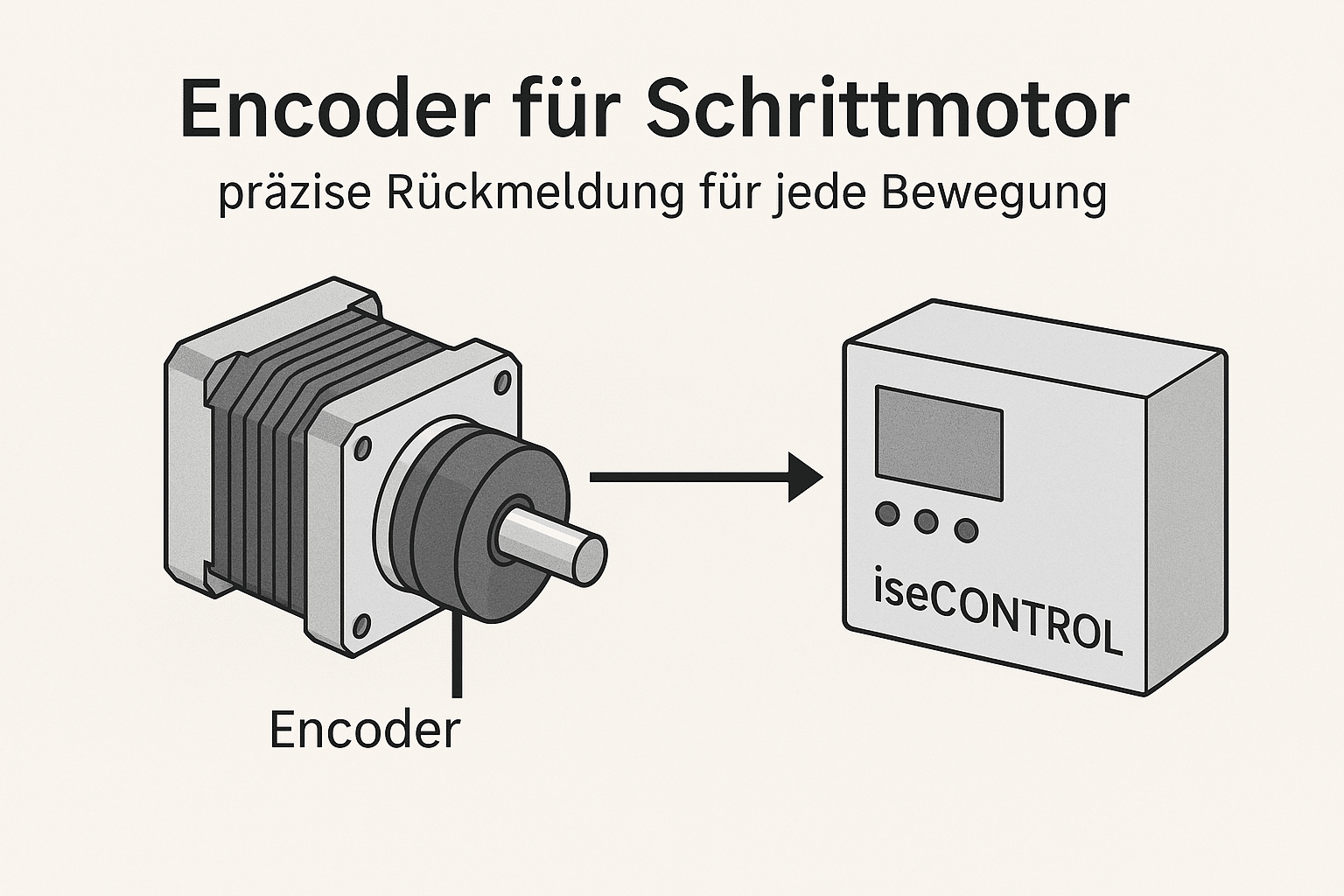
The control system can be quickly integrated into existing machines. It ensures that every movement is carried out correctly and reliably – even under difficult conditions.
Positioning systems in mechanical engineering
For machine builders, a good positioning system is a crucial component because it directly affects the quality, speed and reliability of an installation.
For example, in a packaging line, products must be positioned precisely before they are sealed or labelled. If the system is inaccurate, the entire process may stall or produce faulty packaging.
This is why many equipment manufacturers place great importance on axes with high positioning repeatability, reliable feedback and straightforward control.
A system such as iseCONTROL provides a practical way to meet these requirements. This saves development time and reduces the risk of failures in the field.
Integration into existing installations
Flexibility is a major advantage of modern positioning systems. Standardised interfaces such as PROFINET and PROFIBUS make it easy to integrate controllers such as iseCONTROL into existing environments.
Many users rely on SCADA, HMI or PLC systems for overall control. The positioning system provides the precision needed for individual movements and responds immediately to commands.
This allows complex processes to be coordinated centrally while maintaining safe operation and fast response times.
Conclusion
A positioning system is more than a motor with a guide mechanism. It is a central component of modern machines that determines quality, efficiency and reliability.
Keeping movement under control starts with choosing the right positioning system.
With precise movements, easy integration and flexible control options, systems such as iseCONTROL offer an ideal solution for many applications, from custom machine building to series production.